


NewsGate Press Network
Two famous bird sanctuaries in India have been included in the list of RAMSAR List of ecosystems, a global standard with regard to environmental protection of wetlands.
On Sunday the 31st of January 2026, the Prime Minister in a message tweeted on social media welcomed addition of the Patna Bird Sanctuary in Etah (Uttar Pradesh) and Chhari-Dhand in Kutch (Gujarat) as RAMSAR sites.
Congratulating the local population and all those passionate about wetland conservation the PM stated that these recognitions reaffirm our commitment to preserving biodiversity and protecting vital ecosystems.
Responding to a post by Union Minister, Shri Bhupender Yadav, Prime Minister posted on X:
“Delighted that the Patna Bird Sanctuary in Etah (Uttar Pradesh) and Chhari-Dhand in Kutch (Gujarat) are Ramsar sites. Congratulations to the local population there as well as all those passionate about wetland conservation. These recognitions reaffirm our commitment to preserving biodiversity and protecting vital ecosystems.
With the latest addition to the coveted list of protected wetlands, India now has 98 RAMSAR Sites.
A RAMSAR site a designated wetland of international importance under the RAMSAR Convention on Wetlands, an international environmental treaty signed on 2 February 1971 in Ramsar, Iran the auspices of UNESCO.
It came into force on 21 December 1975, when it was ratified by a sufficient number of nations.
It provides for national action and international cooperation regarding the conservation of wetlands, and wise sustainable use of their resources.
Ramsar treaty participants meet regularly to identify and agree to protect “Wetlands of International Importance”, especially those providing waterfowl habitat.
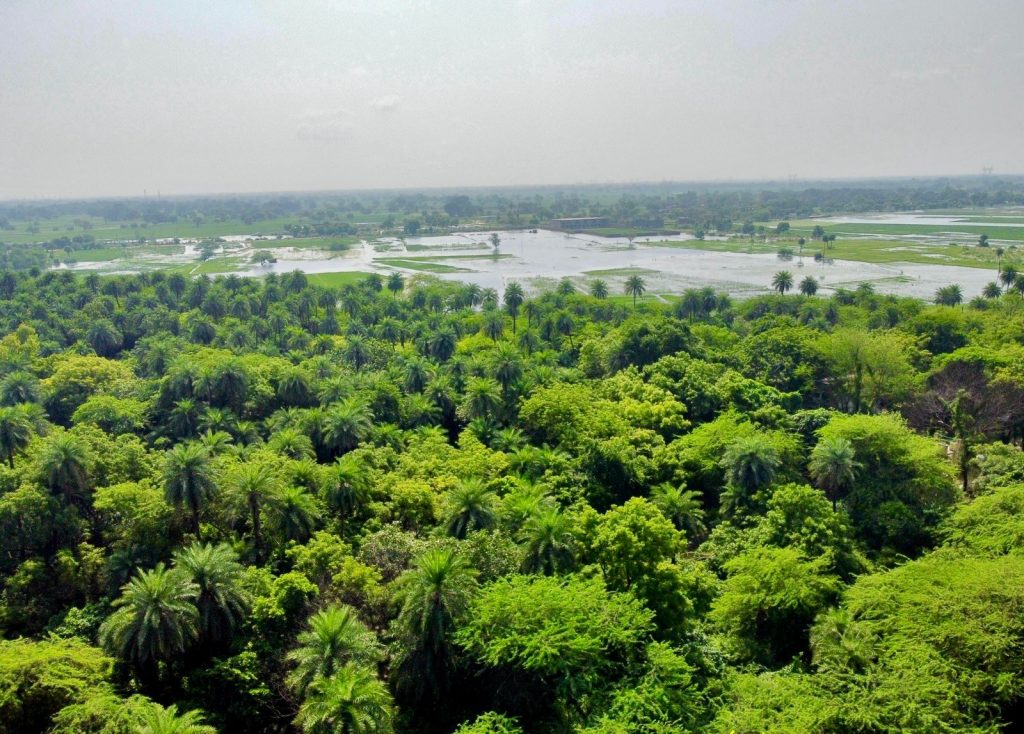
The Patna Bird Sanctuary features freshwater marshes, woodlands, and grasslands, all of which are surrounded by agricultural landscapes.
This variety of habitats supports a rich biodiversity, with 178 bird species and 252 plant species recorded in the area.
Patna Bird Sanctuary is especially vital for waterbird populations and has been designated as an Important Bird and Biodiversity Area (IBA) by Bird Life International.
It also provides habitat for larger species, including the regionally vulnerable broad-snouted crocodile (Crocodylus palustris).
Comments are closed for this post.