


NewsGate Press Network
Stage is all set for the announcement of ‘mother-of-all-deals’ on coming Tuesday that is on 27th of January 2026, the India European Union Free Trade Agreement (FTA).
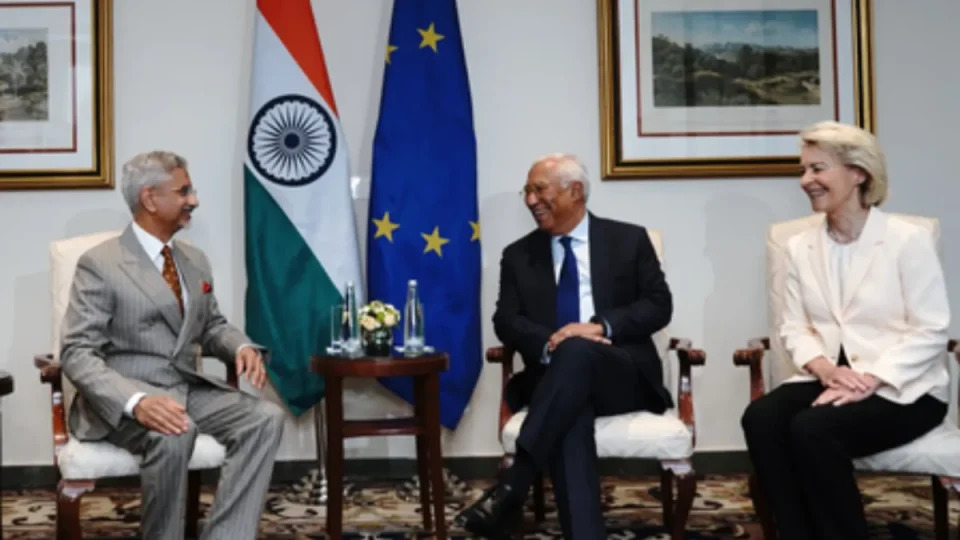
European Commission President Ursula von der Leyen is in the National Capital along with President of the European Council Antonio Costa.
Both leaders are scheduled to hold summit level talks with the Prime Minister Narendra Modi on 27th of January.
This year both Ursula von der Leyen and Antonio Costa are the chief guests at the 77th Republic Day Parade.
The FTA with the European Union is aimed at boosting economic ties between the two regions amid disruptions in global trade due to US tariffs, an official said.
To recall, the talks with the EU had first started in the year 2007 and now only after 18 years it is nearing the finishing line.
Commerce and Industry Minister Piyush Goyal has already been widely quoted in the media for the past few days that this Free Trade Agreement (FTA) with the EU is the “mother of all deals” that India has signed so far.
The FTA between the two nations is expected to lower or eliminate tariffs for India’s labour-intensive sectors, while EU may gain greater market access for its high-end cars and wines
While India and the 27-nation bloc EU will announce closure of FTA talks this week, it will be signed after legal vetting of the text on a mutually agreed date, according to sources.
Implementation of the deal may take some time as it requires approval of the EU Parliament at Brussels.
In India, it requires only a go-ahead from the Union Cabinet.
Commerce ministry officials point out that both India and EU are set to reduce or eliminate import duties altogether on over 90 per cent of goods traded between them.
On a number of products (like from labour intensive sectors such as textiles and footwear), duties get eliminated immediately on the first day of implementation of a trade pact.
On certain items, the duty gets eliminated or reduced in a phased manner over five, seven or ten years.
The two sides also provide quota-based market access for certain sectors like alcoholic beverages and automobiles (in case of trade deals with Australia and the UK), while no duty cuts are extended for sensitive goods like some agri products to protect small and marginal farmers.
Besides, an FTA also liberalises norms to promote trade in services sectors such as telecommunications, transportation, accounting, and auditing.
India’s pact with the EU will be the biggest, as the bloc comprises 27 developed countries. The EU includes France, Germany, Spain, Italy, Austria, Belgium, Bulgaria, Finland, Hungary, Ireland, the Netherlands, Portugal, Poland, Denmark, and Sweden.
Comments are closed for this post.