


NewsGate Press Network
The principal opposition party, the Congress launched a pointed and sharp attack on Prime Minister Narendra Modi, accusing him of reversing his stand on the implementation of women’s reservation by allegedly attempting to claim sole credit for a policy shift driven by political compulsions ahead of key elections.
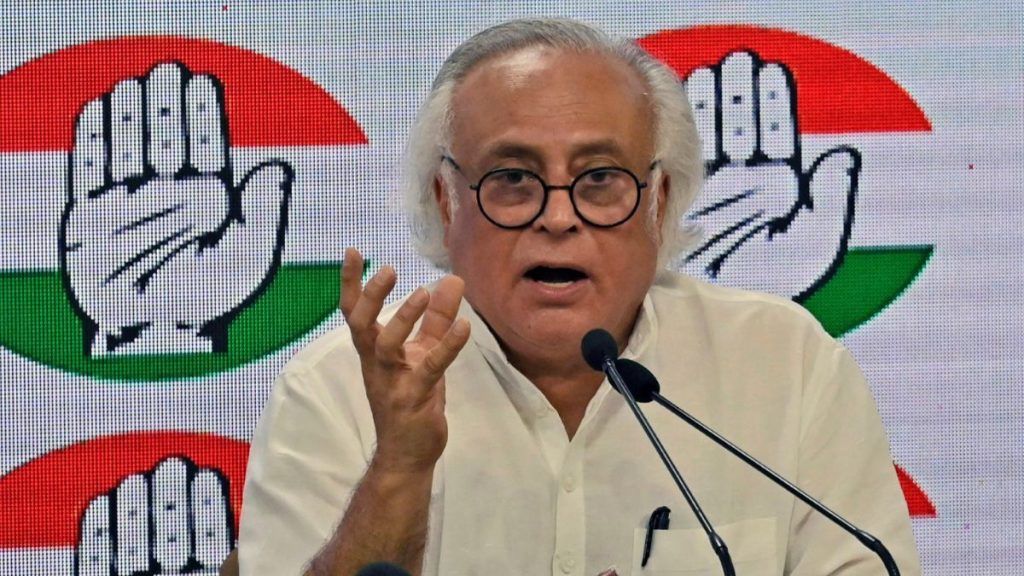
On Friday the 10th of April 2026, the Congress general secretary Jairam Ramesh in a detail statement alleged that the Prime Minister had begun writing articles in the media to project himself as the “sole champion” of women’s reservation in the Lok Sabha and state Assemblies from 2029, while ignoring the government’s earlier stance that delayed its rollout.
“Actually, he owes an apology to the women of India,” Jairam Ramesh said, while referring to the passage of the Nari Shakti Vandan Adhiniyam in 2023.
Jairam said that the legislation, which provides for 33 per cent reservation for women in the Lok Sabha and state Assemblies, was passed unanimously in Parliament, but the Congress had demanded its implementation from the 2024 elections itself.
The Congress leader said that the government had made the implementation contingent on the completion of the Census and a subsequent delimitation exercise, processes that he said had been delayed for years.
“This was not acceptable to the Prime Minister, who made the reservation dependent on the delimitation and Census exercises that he had failed to conduct and then dithered on for many years,” he said.
Jairam Ramesh further claimed that, nearly 30 months after the law’s passage, the government was now seeking to “change its narrative” by downplaying the need for Census-linked delimitation, even though official timelines suggest Census results could be ready by 2027.
“He wants us to forget the Census and forget the census-based delimitation on the grounds that it will take too long,” Ramesh said, alleging that the shift was politically motivated.
Linking the issue to upcoming electoral contests, Ramesh accused the ruling party of attempting to mobilise women voters in states like Tamil Nadu and West Bengal. “It’s a narrative based on lies and equivocation, all undertaken with the hope that women of these states will flock to the BJP. After all, the BJP has no worthwhile narrative on any other issue in these states,” he said.
The Congress also criticised the functioning of the Election Commission, alleging that it had acted as a “subordinate office of the union Home Ministry,” even as it claimed the ruling party was facing electoral setbacks.
Describing the government’s position as a “U-turn,” Ramesh said it exposed an unwillingness to engage constructively with the opposition and reflected a lack of planning.
“Mr Modi is already claiming credit for the U-turn as well. There is simply no limit to his hypocrisy and deception,” he added, accusing the government of attempting to divert attention from what he termed as “failures in governance and setbacks in foreign policy.”
The Nari Shakti Vandan Adhiniyam, passed in 2023, marked a significant milestone in India’s long-pending effort to enhance women’s representation in legislatures.
However, its implementation timeline—linked to delimitation following the next Census—has remained a subject of political debate, with opposition parties pressing for an earlier rollout while the government has maintained that procedural prerequisites must be completed first
Comments are closed for this post.