


NewsGate Press Network
The union government has released new guidelines for the treatment of lung cancer.
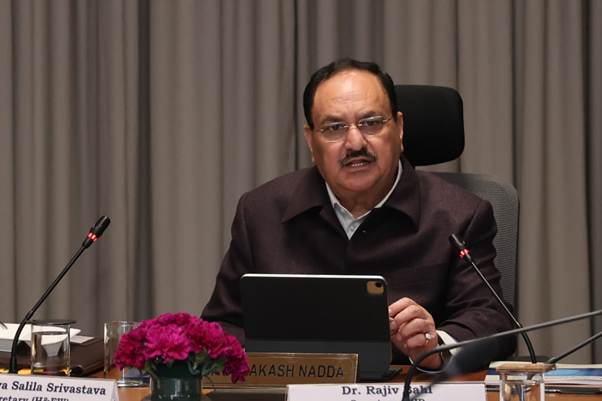
On Tuesday the 3rd of February the Union Minister for Health & Family Welfare, Jagat Prakash Nadda formally released the detailed document titled “Lung Cancer Treatment and Palliation: Evidence-Based Guidelines”.
The guidelines aim to provide a standardized, evidence-based framework for the diagnosis, treatment, and palliative care of lung cancer patients across the country, ensuring high-quality, accessible, and patient-centric care.
Developed by leading experts and stakeholders in oncology, the document seeks to strengthen clinical decision-making, promote best practices, and reduce variations in treatment outcomes.
Congratulating the Department of Health Research (DHR), Directorate General of Health Services (DGHS), and partner institutions, Nadda lauded their collaborative efforts in developing India’s first nationally developed evidence-based cancer guideline.
He noted that the guidelines would play a critical role in standardizing clinical practices, strengthening decision-making, and ensuring high-quality, patient-centric cancer care across the country.
Nadda also stated that the release of the Lung Cancer Treatment and Palliation: Evidence-Based Guidelines marks a strong national resolve to combat cancer through science, compassion, and leadership.
He congratulated the Department of Health Research, Directorate General of Health Services, and the Ministry of Health & Family Welfare, along with all partner institutions, for their dedicated efforts in developing these landmark national guidelines.
The Health Ministry has emphasized that early detection remains one of the biggest challenges in Lung cancer management, and stressed the need to strengthen preventive and screening strategies, particularly among high-risk populations.
The new cancer guidelines comprise 15 evidence-based recommendations addressing both treatment and palliative care for lung cancer.
Developed using internationally accepted methodologies, including systematic evidence synthesis and contextualisation to the Indian healthcare setting, the Guidelines aim to standardise clinical practices across public and private sectors, strengthen early diagnosis and treatment pathways, and enhance palliative care services, thereby improving patient outcomes and quality of life.
The Guidelines have been made available on the DHR website for access by all stakeholders. In addition, a plain-language summary will also be provided to facilitate easy understanding and reference for patients, families, and caregivers.
Full Guidelines can be accessed through https://dhr.gov.in/whatsnew/eve-world-cancer-day-honorable-union-health-minister-releases-evidence-based-guidelines
Comments are closed for this post.