


NewsGate Press Network
The much-hyped Islamabad Talks held between US and Iran failed to reach any agreement.
Early on Sunday the 13th of April 2026, soon after the talks, the US delegation blamed Iran for rejecting the terms of an agreement, Iran said the talks ended without any outcome because of ‘excessive’ demands made by the US.
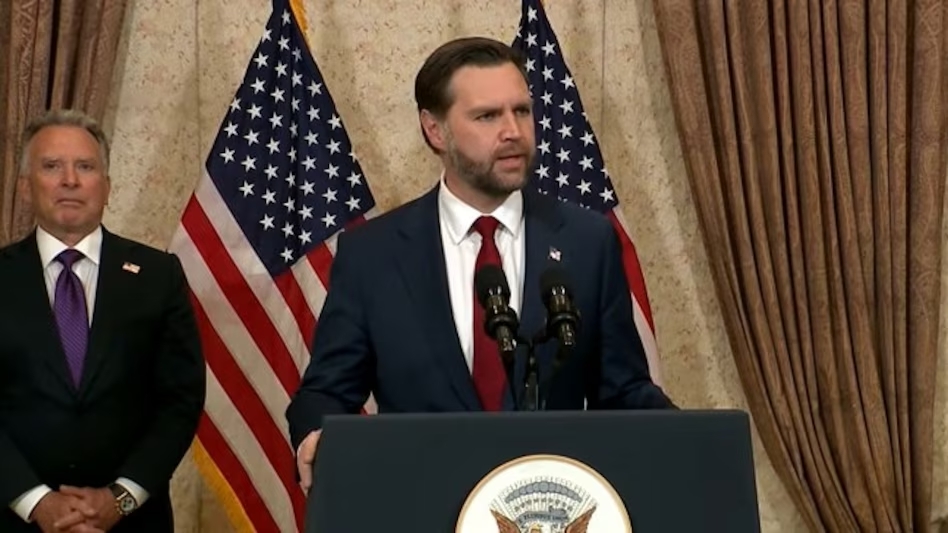
US Vice President J D Vance said they were returning home without a deal.
‘They (Iran) have chosen not to accept our terms,’ Vance told media persons before taking his flight back to America.
Iran said the two sides have not reached an agreement due to the US team’s excessive demands and ambitions. Tehran had insisted on securing Iran’s rights.
Vance said the key issue for the United States was whether Iran is willing to make a long-term commitment not to develop nuclear weapons.
‘The question is simple: do we see a fundamental commitment of will for the Iranians not to develop a nuclear weapon — not just now, not just two years from now, but for the long term? We haven’t seen it yet. We hope that we will,’ he said.
Vance said that while Iran’s nuclear programme has been “destroyed,” there is still need for a clear and lasting commitment to prevent any future development of nuclear weapons.
He said that although there had been ‘a number of substantive discussions,’ the failure to reach an agreement was ‘bad news for Iran much more than it’s bad news for the United States.’
He said the proposal presented by the United States was its ‘final and best offer.’
‘We’ve made it very clear what our red lines are, what things we are willing to accommodate them on and what things we are not willing to accommodate them on,’ Vance said, adding that the Iranian side chose not to accept those terms.
Iran said that during nearly 21 hours of intensive negotiations, their (Iranian) negotiating team, prevented the realization of US ‘excessive demands’ by preserving the fundamental rights of the people of Iran in various political and military fields and peaceful nuclear technology.
The US delegation included Vance, special envoy Steve Witkoff and Trump’s son-in-law Jared Kushner while Iranian team included Parliament Speaker Mohammad Baqer Qalibaf, Foreign Minister Seyed Abbas Araqchi and experts.
Iran’s semi-official Tasnim news agency quoted Iranian officials as saying that the US intended to achieve goals that they failed to achieve during the war, including the issue of the Strait of Hormuz and the removal of nuclear materials from the country. The Iranian delegation thwarted that effort, Tasnim reported.
The Iranian team tried to push the American side towards reaching a common framework by offering various initiatives, but the American ‘greed’ for excessive demands had pushed them far from rationality and realism, Tasnim reported.
Vance said he spoke with President Donald Trump at least half a dozen times during the talks, and one of the most significant points of difference between the two sides had been around the development of nuclear weapons.
Iran government had said earlier that negotiations would continue and technical experts from both sides would exchange documents.
The Islamabad talks were the first direct US-Iran meeting in more than a decade and the highest-level discussions since the 1979 Islamic Revolution.
The Iranian delegation had arrived in Islamabad on Friday dressed in black in mourning for late supreme leader Ayatollah Ali Khamenei and others killed in the war.
They also carried shoes and bags of some of the 170 students who were killed in US bombing of a girls school at the beginning of the war.
Comments are closed for this post.