


NewsGate Press Network
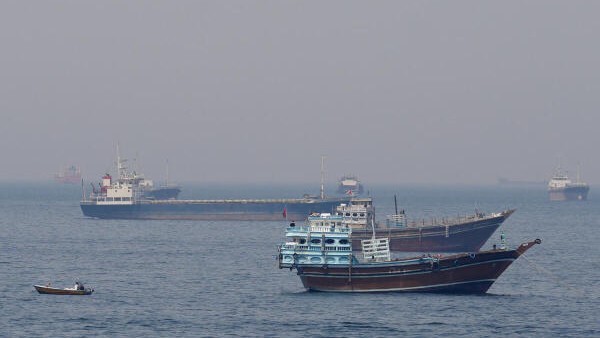
It was officially stated on Thursday the 7th of May 2026 that 11 Indian flagged vessels have successfully sailed past the Strait of Hormuz, while 13 other ships were awaiting their clearance for safe passage from iran.
“We have seen forward movement and, as a result of diplomatic engagement and conversations with the Iranian side, 11 Indian ships have so far exited the Strait of Hormuz. Thirteen ships continue to remain in the Persian Gulf, and we are in touch with the Iranian authorities to ensure that the remaining vessels are also able to cross the Strait of Hormuz and reach India, which is their destination,” Ministry of External Affairs spokesperson Randhir Jaiswal said his weekly presser.
Responding to questions regarding Iranian vessels and maritime access, Jaiswal said ships from other countries do not require permission to operate in international waters.
“If ships of other countries want to ply in international waters, no permission is required… But to your specific question about whether they want to come into Indian waters, this is something that the Ministry of Shipping or the relevant technical authorities would be able to answer,” he said.
The MEA’s official reaction came-in after Iran has reportedly introduced a new set of rules for vessels exiting the Strait of Hormuz.
Meanwhile, US President Donald Trump announced that the US military operation facilitating ship movement through the Strait of Hormuz would be temporarily paused following what he described as progress in negotiations with Iran and a request from Pakistan.
In a post on his Truth Social platform, Trump said, “Based on the request of Pakistan and other countries, the tremendous Military Success that we have had during the Campaign against the Country of Iran and, additionally, the fact that Great Progress has been made toward a Complete and Final Agreement with Representatives of Iran, we have mutually agreed that, while the Blockade will remain in full force and effect, Project Freedom (The Movement of Ships through the Strait of Hormuz) will be paused for a short period of time to see whether or not the Agreement can be finalized and signed.”
The UK’s Maritime Trade Operations (UKMTO) organisation said the threat in the Strait of Hormuz is at a critical level after a series of attacks in the last 48 hours.
The report comes as US “naval units transiting the Strait of Hormuz repelled various threats” yesterday and today, the organisation said.
It noted that there have been “navigation interference, blockade enforcement, mine reports, residual kinetic risk” and “risk of attack or miscalculation in the Strait of Hormuz”.
The Gulf of Oman was also given a “critical” assessment. UKMTO said it was due to “historical projectile/UAV strikes”, referring to unmanned aerial vehicles or drones, and because armed “naval presence remains high”.
Commercial traffic through the strait has collapsed to just five transits on May 4 and six on May 3, against a historical daily average of 138.
“The operating environment remains high risk based upon recent attacks on ships in the area. Multiple instances of aggressive hailing and assertive action by Iranian units have been noted in the last 48 hours.
Comments are closed for this post.