


NewsGate Press Network
Fireworks have already started days before the Special Session of Parliament as the opposition Congress has alleged that BJP-led government under Narendra Modi of attempting to use the Women’s Reservation law as a “cover” to push through delimitation and sidestep the demand for a caste census.
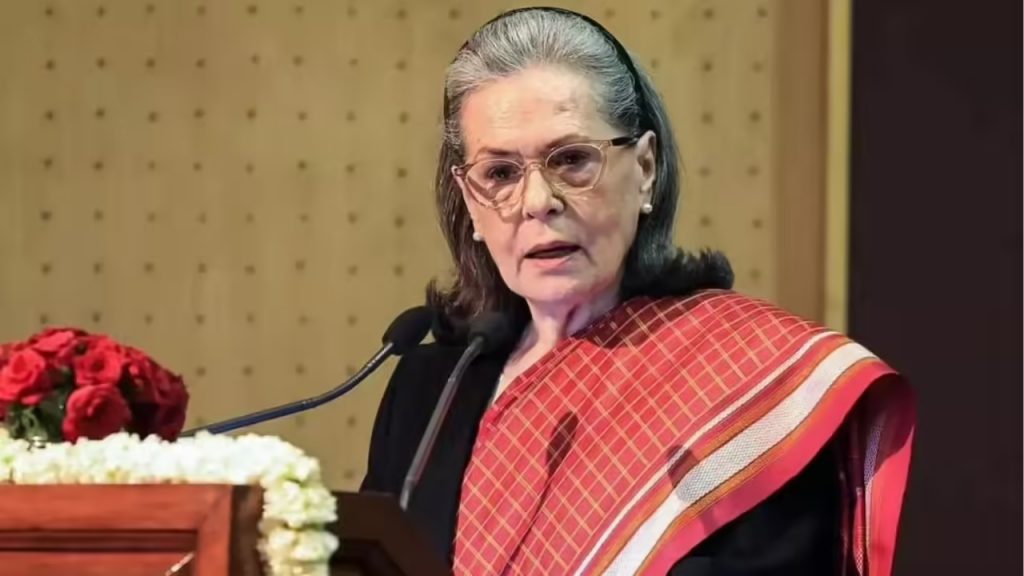
On Monday the 13th of April 2026, Sonia Gandhi in a lengthy media article alleged the move by Treasury Benches is being carried out in a hurried and “undemocratic” manner.
Addressing a press conference, party spokesperson Supriya Shrinate said, “Don’t try to hide behind the Women’s Reservation,” asserting that the issue of reserving seats for women had already been settled when Parliament unanimously passed the legislation in September 2023.
She claimed the government’s “real intention” now was to move ahead with delimitation while avoiding a caste-based census.
Shrinate pointed out that the law had linked the implementation of women’s reservation to the completion of a fresh census and subsequent delimitation exercise, a move she said the opposition had objected to at the time.
She noted that Congress leaders, including party president Mallikarjun Kharge and Congress Parliamentary Party chairperson Sonia Gandhi, had demanded immediate implementation of the quota without such preconditions so that women could benefit from it as early as the 2024 general elections.
Questioning the government’s timing, Shrinate asked, “What has changed in the last thirty months? Why this change of heart?” She alleged that the Centre was now prioritising delimitation and attempting to “escape” the caste census debate, recalling that the Prime Minister had previously criticised proponents of caste enumeration.
Citing a recent article by Sonia Gandhi, Shrinate said the Congress leader had “exposed the government’s true intention,” arguing that while women’s reservation had broad political consensus, delimitation remained a contentious and unresolved issue requiring wider consultation.
Providing historical context, Shrinate said the foundation for women’s political representation was laid during the tenure of former Prime Minister Rajiv Gandhi through the 73rd and 74th Constitutional Amendments, which enabled large-scale participation of women in local governance.
She noted that today nearly 15 lakh women representatives serve in urban and rural local bodies, accounting for around 40 percent of the total.
The Congress also raised concerns over the timing of the proposed special parliamentary session, noting that it coincided with active election campaigns in states such as West Bengal and Tamil Nadu.
Shrinate questioned whether Members of Parliament from these states would be able to fully participate in both legislative proceedings and election activities.
She further pointed to opposition demands for an all-party meeting to discuss delimitation after April 29, asking why the issue was not taken up earlier when Parliament was already in session or scheduled after ongoing elections.
Criticising the proposed basis for delimitation, Shrinate questioned the reliance on the 2011 Census data, arguing that demographic realities had significantly changed.
“How will the government determine SC and ST seats based on outdated figures?” she asked, adding that with a new digital census expected to be completed by 2027, there was no justification for rushing the process.
The Congress maintained that delimitation must be “politically equitable and not just arithmetically driven,” warning that any attempt to redraw constituencies without updated data and broader consensus could undermine democratic representation.
Shrinate also alleged that the government was seeking to shift political focus ahead of elections.
“He wants to create an excuse and blame the opposition on the issue of women’s reservation,” she said, adding that issues such as unemployment, inflation, and foreign policy challenges would otherwise dominate public discourse.
Comments are closed for this post.