


NewsGate Press Network
Congress has once again comes out against the central government’s project to develop the Nicobar Islands in the Andamans.
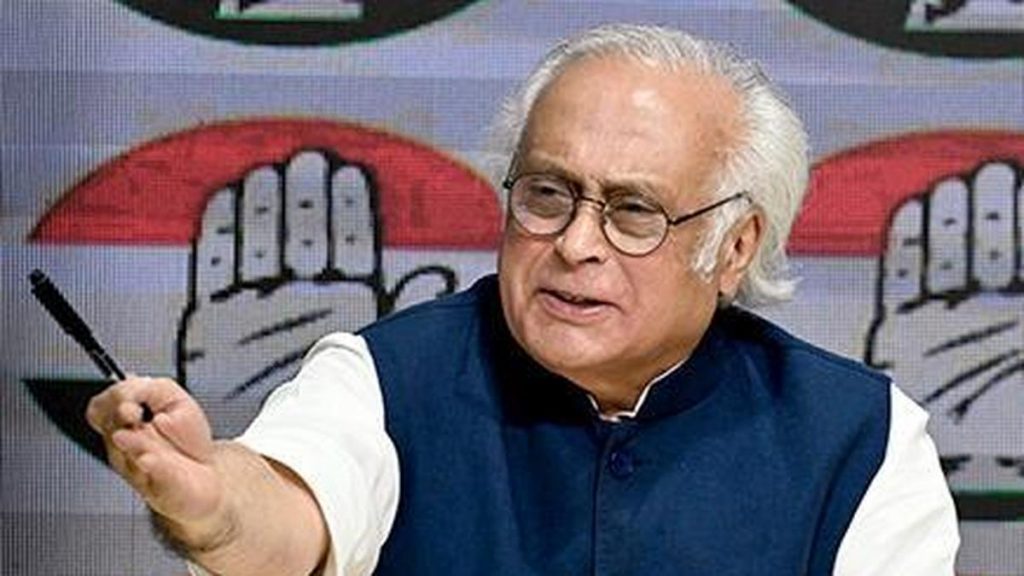
On Wednesday the 20th of May 2026, senior Congress leader Jairam Ramesh accused the centyral government of running a “propaganda campaign” to brand critics of the Great Nicobar Island Project as being “soft on China”, while alleging that the Centre itself had followed a policy of “Continuing, Calibrated Capitulation to China”.
Jairam in a social media message tweeted on X stated that environmental concerns surrounding the ambitious infrastructure project in Great Nicobar were being deliberately dismissed through politically motivated attacks.
“The Modi Govt has now launched a propaganda campaign through its ecosystem to portray all those concerned about the ecological havoc that will be caused by the Great Nicobar Island Project as being ‘soft on China’,” Ramesh said. “This is the height of hypocrisy, coming as it does from a Govt that practices the 4C policy—Continuing, Calibrated Capitulation to China.”
The Congress leader linked his criticism of the project to what he described as the government’s broader handling of relations with China following the 2020 Galwan Valley clashes.
Referring to Prime Minister Narendra Modi’s statement after the Ladakh standoff, Ramesh alleged that the Prime Minister had given China a “clean chit” despite the deaths of 20 Indian soldiers.
“It was the PM who gave an inexplicable clean chit to China on June 19, 2020, in a brazen insult to the 20 jawans who had been martyred earlier in Ladakh,” he said.
Ramesh further claimed that the government had conceded traditional patrolling and herding rights in several areas of Ladakh during negotiations with Beijing and criticised India’s trade imbalance with China.
According to him, India recorded a trade deficit of nearly $115 billion with China in 2025-26, adversely affecting domestic industries, particularly MSMEs.
He also referred to alleged revelations by senior Army officers regarding China’s role during “Operation Sindoor” in May 2025, claiming the government had failed to respond adequately to the disclosures.
At the centre of Ramesh’s criticism was the Great Nicobar Island Project, a multi-billion-dollar development initiative that includes a transshipment port, airport, township and power infrastructure in the ecologically sensitive Andaman and Nicobar archipelago.
Ramesh argued that the project was “overwhelmingly a commercial enterprise” and asserted that the proposed transshipment port had “no component of military infrastructure”.
He claimed that suggestions to expand military infrastructure at INS Baaz and other facilities under the Andaman and Nicobar Command had been ignored.
“The Great Nicobar Island Project that the PM is bulldozing through is, in all likelihood, going to be part of the sprawling Modani business empire,” Ramesh alleged, using a term often employed by Opposition parties to refer to the perceived proximity between the Modi government and the Adani Group.
He warned that the project could have “disastrous ecological and humanitarian impacts”, echoing concerns raised by environmentalists and tribal rights activists over deforestation, biodiversity loss and the impact on indigenous communities in the region.
The government has maintained that the Great Nicobar project is of strategic and economic importance and will boost India’s maritime connectivity in the Indo-Pacific region.
Officials have previously defended the project as a key national infrastructure initiative aimed at enhancing trade and logistics capabilities while incorporating environmental safeguards.
Comments are closed for this post.